How to Choose an Aluminium Door With Window in 2026?

Time:2026-10-23 Author:Isabella
0%

Choosing an Aluminium Door With Window in 2026 requires more than comparing colours and online prices. The right product should balance daylight, security, insulation, durability, and everyday comfort. A slim frame may look elegant, yet it can perform poorly without a reliable thermal break. Large glass panels can brighten a hallway, but they may also increase heat gain and reduce privacy. Details matter.

Start with the building’s climate, wall opening, and daily use. Coastal homes need strong corrosion resistance, while colder regions benefit from thermally improved frames and suitable double or triple glazing. Check the glass specification, drainage design, locking points, hinges, seals, and tested air and water performance. Ask for documented product data, not vague promises. An experienced installer should verify measurements on site before manufacturing begins. A few millimetres can cause expensive problems.

Safety should remain practical. Tempered or laminated glass may reduce injury risks, depending on the location and local requirements. Low-maintenance powder coating is useful, but it is not maintenance-free. Clean the tracks, inspect seals, and adjust hardware when needed. There is no perfect door for every property. That assumption can fail. Budget, appearance, energy goals, and accessibility may conflict. A careful decision accepts these compromises and prioritises the features your home genuinely needs. This guide explains how to compare materials, glazing, security, installation quality, and long-term value before choosing with confidence.
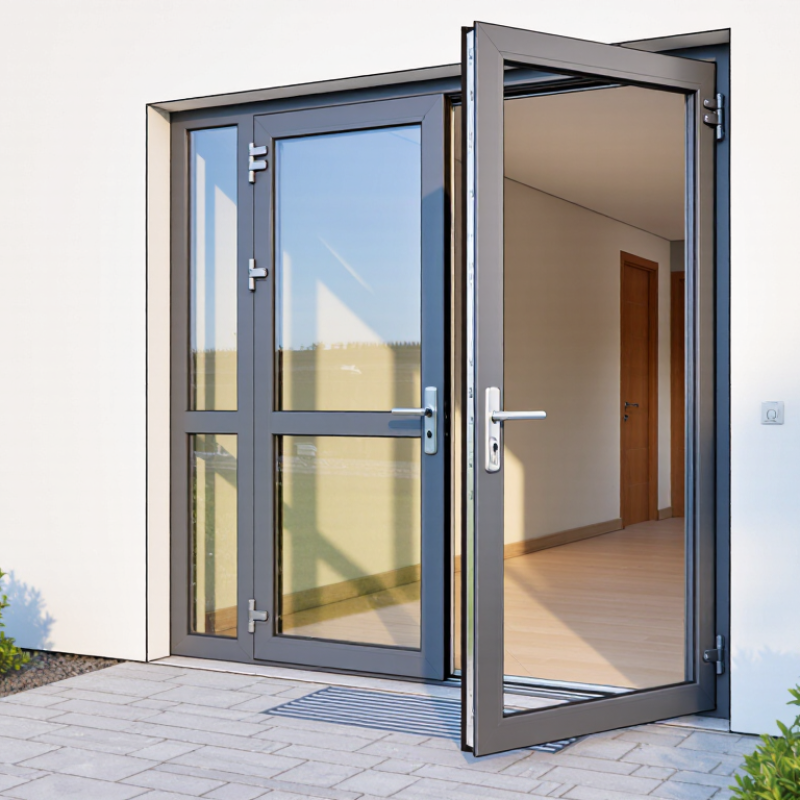
How to Choose an Aluminium Door With Window in 2026?

Define Your Space, Access Needs, and Door Configuration

How to Choose an Aluminium Door With Window in 2026?

Define the space before choosing the frame. Measure the opening, wall depth, daylight direction, and nearby furniture. A narrow entry may suit a single hinged door with a vertical window. Wider openings can support double doors or sliding panels. Sliding systems save swing space, but their tracks need frequent cleaning. In my site checks, small measurement errors often create larger installation problems.

Access needs matter just as much. Allow clear approach space for wheelchairs, strollers, and heavy deliveries. Choose a low threshold, easy-grip handle, and a door swing that does not block a hallway. For ventilation, consider an opening sash beside the main door. According to the U.S. Department of Energy, windows can account for 25–30% of household heating and cooling energy use. Therefore, select low-emissivity glazing, suitable solar control, and thermally broken aluminium. The wrong glass can make a bright entrance uncomfortable.

Tips: Compare U-factor, solar heat gain coefficient, and air-leakage data, not only appearance. The 2023 Global Status Report for Buildings and Construction states that buildings use about 30% of global energy. Small choices still matter. Check drainage holes after installation. Confirm handle height and track access in real conditions. A perfect configuration rarely exists. I would still revisit the plan after observing morning and afternoon sunlight.

Compare Aluminium Grades, Frame Profiles, and Window Designs

Choosing an aluminium door with a window starts with the alloy, not the colour. In residential projects, 6063 aluminium is widely used because it extrudes cleanly and supports neat architectural profiles. 6061 offers greater strength, but it can be less convenient for detailed frame shapes. The temper also matters. T5 and T6 indicate different heat treatments and performance levels. Ask for the alloy and temper, not just “premium aluminium.”

Frame profiles affect comfort, durability, and glass size. A thermal-break profile separates the exterior and interior aluminium with an insulating strip. This reduces heat transfer and condensation around the frame. Multi-chamber sections can improve rigidity, but more chambers do not guarantee better performance. Check wall thickness, corner joints, drainage paths, and tested air and water resistance. A poorly installed frame can waste good materials.

Window design should match daily movement and climate. Casement windows usually provide wide ventilation and tight closure. Sliding designs save interior space but may seal less effectively. Fixed glass brings more daylight and fewer moving parts. Awning windows can ventilate during light rain. I once preferred a large sliding panel for convenience, then noticed its track collected grit quickly. That choice needed more thought. Consider glazing thickness, low-emissivity glass, safety requirements, and handle height. A qualified installer should verify measurements on site before fabrication.

Evaluate Glass Types, Energy Efficiency, and Natural Light

How to Choose an Aluminium Door With Window in 2026?

Glass selection should begin with your room, climate, and daily light needs. The U.S. Department of Energy reports that windows can cause 25–30% of household heating and cooling energy loss. Aluminium frames need thermal breaks to reduce heat transfer through the metal. Choose double glazing for moderate climates, or triple glazing for colder regions. Low-emissivity coatings can limit winter heat loss and summer heat gain.

Check the NFRC label for U-factor, solar heat gain coefficient, and visible transmittance. A lower U-factor usually means better insulation. A lower solar heat gain coefficient can help sun-exposed rooms stay cooler. Visible transmittance matters when natural light is important. Large clear panes brighten dark interiors, but they may create glare near desks or televisions. I would not choose maximum glass automatically. The brightest option is not always the most comfortable.

Tips: Sketch sunlight at 9 a.m., noon, and 4 p.m. before ordering. Select higher visible transmittance for shaded walls. Consider lower solar heat gain for strong western sun. Ask for a whole-door performance figure, not glass data alone. Small gaps around the frame can undermine expensive glazing. This detail is often overlooked.

Check Security Features, Hardware Quality, and Weather Resistance

How to Choose an Aluminium Door With Window in 2026?

Security starts with the frame, lock, and glass working together. Choose a reinforced aluminium profile with strong corner joints and a multi-point locking system. The window should use laminated or toughened safety glass, especially near ground-level entrances. Ask whether the lock cylinder resists drilling and forced turning. Small details matter. A narrow gap around the door can weaken the whole installation.

Hardware quality affects daily comfort and long-term safety. Open and close the sample door several times. It should move smoothly without scraping, shaking, or loud clicking. Check the hinges, handles, rollers, and drainage channels. Stainless or corrosion-resistant hardware suits humid areas better. I once inspected a door with an attractive finish but weak hinges. It sagged after repeated use. Appearance can mislead.

Weather resistance deserves equal attention. Look for continuous seals around the frame and adjustable compression points. These help block rain, dust, wind, and outdoor noise. Ask for test information covering water penetration, air leakage, and wind pressure. Do not guess. Your local climate matters more than a showroom display. In coastal locations, salt can damage unsuitable finishes quickly. In cold regions, poor thermal breaks may create condensation on the interior frame. A professional installer should check wall levels, sill drainage, and fixing depth before installation. Even a high-quality door can perform poorly when fitted carelessly.

Confirm Measurements, Installation Requirements, and Long-Term Care

How to Choose an Aluminium Door With Window in 2026?

Choosing an aluminium door with a window starts with accurate measurements, not attractive photographs. Measure the opening at the top, middle, and bottom. Record the height on both sides. A few millimetres matter. Measure twice. Note the wall thickness, floor level, and sill condition. If measurements differ, use the smallest width when checking fit. This cautious approach leaves adjustment space and reduces pressure on the frame. I have found that uneven floors often create problems that measurements alone cannot reveal.

Confirm installation requirements before placing an order. Check whether the wall can support the frame and where anchors will be fixed. The installer should verify drainage, weather sealing, glass clearance, and door swing direction. Ask for written information about frame dimensions, glass safety performance, insulation values, and maintenance needs. Local construction requirements may also affect glazing and emergency access. Do not assume every opening is ready. Sometimes, minor repair work is needed first.

Tips: Clean aluminium surfaces with mild soap and water. Avoid abrasive pads and strong solvents. Inspect seals after heavy rain, especially around the lower corners. Keep drainage openings clear. Lubricate moving hardware only when recommended. If the door rubs, closes unevenly, or admits water, stop forcing it. Record the issue and request a qualified adjustment. Even careful planning can miss a small detail. That is worth reviewing.

How to Choose an Aluminium Door With Window in 2026? - Confirm Measurements, Installation Requirements, and Long-Term Care

Decision Area What to Confirm Typical Data or Target Installation Requirement Long-Term Care
Opening Measurements Measure width at the top, middle, and bottom; measure height at the left, center, and right. Record the smallest width and height. Allow an installation gap according to the approved system specification, commonly about 10–20 mm overall. The opening should be square, plumb, structurally sound, and free from loose mortar or damaged substrates. Check for movement, cracking, or water entry around the frame during the first year and after major building work.
Finished Door Size Confirm whether the quoted dimensions refer to the frame size, outer reveal size, or masonry opening. Use the manufacturer’s approved deduction rather than subtracting a universal amount. Keep the frame centered and use packers at fixing points so the frame is not twisted. Do not alter the frame or trim without checking that drainage and weather seals remain effective.
Door Configuration Choose single, French, sliding, folding, inward-opening, or outward-opening operation. A single door is often practical for a clear opening around 700–950 mm; verify local accessibility rules. Allow space for the sash, handles, furniture, traffic flow, and emergency egress where applicable. Keep the operating area clear and avoid hanging loads or adding unapproved door closers.
Glazing Type Specify safety, thermal, solar-control, acoustic, or decorative glazing based on location and use. Use safety glazing where required by local code, including many doors and areas close to floor level. Glazing must be correctly supported and installed with compatible setting blocks, gaskets, and beads. Clean with mild detergent and soft tools; avoid abrasive pads, blades, and aggressive solvents.
Insulating Glass Confirm the glass build-up, cavity, spacer type, and declared thermal performance. Double glazing commonly uses two panes with a sealed cavity; the exact thickness depends on the system and glass specification. Do not drill, cut, or modify sealed insulating glass units on site. Persistent condensation between panes indicates a failed sealed unit and normally requires replacement.
Thermal Performance Compare the declared whole-door U-value rather than considering the glass alone. Lower U-values indicate better heat insulation; the acceptable target depends on local energy regulations and climate. Use continuous perimeter seals and insulate the junction between the frame and surrounding wall. Inspect seals annually for shrinkage, cuts, hardening, or gaps that can increase drafts.
Weather Resistance Confirm resistance to wind-driven rain, air leakage, and wind pressure for the building exposure. Performance classifications vary by standard; select a tested rating suitable for the project location. Keep sill drainage paths open and install compatible flashing, membranes, or sill pans where required. Clear drainage slots at least twice a year and after heavy construction or landscaping work.
Threshold Design Choose standard, low, or accessible threshold according to water exposure and accessibility needs. Accessible thresholds are often designed with a low height, but the permitted level depends on local regulations. Provide a firm, level base and ensure the threshold does not bridge the damp-proof course or interrupt drainage. Keep the threshold clean and check that seal contact remains even across its full width.
Hardware and Security Confirm lock type, cylinder format, hinge capacity, restrictors, handles, and security requirements. Use hardware rated for the door weight, frequency of use, and exposure; security ratings should match the project specification. Fix hardware to reinforced sections where required and adjust locking points without forcing the sash. Lubricate moving parts only with products approved for the hardware; tighten accessible screws when necessary.
Frame Finish Select a finish suitable for ultraviolet exposure, humidity, pollution, and coastal conditions. Powder-coated and anodised finishes are common; durability depends on the coating class, preparation, and environment. Protect finished surfaces from cement, plaster, welding sparks, and alkaline cleaners during construction. Wash with clean water and a pH-neutral detergent every 3–6 months, more often in coastal or polluted areas.
Fixing and Alignment Confirm fixing type, spacing, substrate condition, and tolerances before installation. Fixing spacing is system-specific; follow the tested installation instructions rather than using a generic spacing rule. Check level, plumb, diagonals, sash gaps, lock engagement, and drainage before final sealing and trimming. If the door rubs, leaks, or becomes difficult to lock, arrange adjustment before continued force causes damage.
Sealants and Interfaces Confirm compatibility between sealant, coating, masonry, membranes, insulation, and adjacent materials. Use a backer rod and suitable movement seal where the joint design requires it; do not rely on surface sealant alone. Follow the sealant manufacturer’s preparation, joint-size, curing, and weather limitations. Inspect perimeter joints annually and renew failed sections after removing loose or contaminated material.
Ventilation and Condensation Consider background ventilation and room humidity, especially in kitchens, bathrooms, and bedrooms. Indoor relative humidity around 40–60% is commonly comfortable, but condensation risk also depends on surface temperature and ventilation. Do not block required vents or drainage channels when fitting blinds, curtains, trims, or insect screens. Ventilate rooms, use extraction where needed, and wipe excess surface moisture during cold weather.
Final Handover Check Test opening, closing, locking, drainage, seals, glazing, finish, and visible frame alignment. The door should operate smoothly without excessive force, abnormal noise, visible gaps, or water leakage. Obtain care instructions, product documentation, warranty terms, and records of glass and hardware specifications. Schedule a basic inspection every 6–12 months and keep a record of cleaning, adjustments, and repairs.

Important: Exact dimensions, tolerances, performance ratings, fixing details, and code requirements must be confirmed against the selected door system, project drawings, and local building regulations.

FAQS

Which aluminium alloy suits a residential door with a window?

6063 aluminium forms neat architectural profiles for many residential frames. 6061 offers greater strength, but detailed shapes may be harder. Ask for the alloy and temper. “Premium” alone proves little.

Why do T5 and T6 matter?

T5 and T6 describe different heat treatments. These treatments affect strength and performance. Do not judge a frame by colour. Request documented specifications.

What does a thermal break do?

A thermal break separates exterior and interior aluminium with an insulating strip. It reduces heat transfer and condensation near the frame. It cannot repair poor installation.

Which frame details deserve inspection?

Check wall thickness, corner joints, drainage paths, and tested air and water resistance. Multi-chamber sections may improve rigidity. More chambers do not guarantee better performance.

Which window design fits different daily needs?

Casement windows offer broad ventilation and tight closure. Sliding windows save indoor space but may seal less effectively. Fixed glass adds daylight and fewer moving parts. Awning windows can ventilate during light rain.

How should the glass be selected?

Match glazing to climate, room use, and sunlight. Double glazing suits many moderate climates. Triple glazing can help in colder regions. Low-emissivity coatings reduce unwanted heat movement.

What do window performance ratings mean?

A lower U-factor usually indicates better insulation. A lower solar heat gain coefficient can cool sun-facing rooms. Visible transmittance shows how much daylight enters. Ask for whole-door data, not glass data alone.

How can homeowners avoid an uncomfortable bright room?

Sketch sunlight at 9 a.m., noon, and 4 p.m. before ordering. Large clear panes brighten rooms but may create glare near screens. Choose higher visible transmittance on shaded walls. Maximum glass is not always best. I learned that late.

Why should measurements be checked before fabrication?

A qualified installer should verify measurements on site. Small frame gaps can undermine expensive glazing. This detail is often overlooked. Good materials cannot rescue careless fitting.

What maintenance issue might affect a sliding window?

Sliding tracks can collect grit quickly. Clean them regularly and inspect the seals. Convenience sounded ideal to me. The track changed my mind.

Conclusion

Choosing an Aluminium Door With Window in 2026 starts with understanding your space, access needs, and preferred door configuration. Consider whether the door is intended for an entrance, patio, balcony, or interior area, and decide how much ventilation, visibility, and natural light you require. Compare aluminium grades and frame profiles for strength, durability, and appearance, while selecting a window design that complements your building’s style and available space.

Glass selection is also important. Double glazing, low-emissivity options, and suitable coatings can improve comfort and energy efficiency while allowing natural light into the room. Pay close attention to secure locks, strong hinges, dependable hardware, weather seals, and resistance to wind and moisture. Before ordering, confirm accurate measurements, wall conditions, opening direction, drainage, and installation requirements. Finally, choose a design that is easy to clean and maintain, and follow regular care practices to preserve its performance, security, and appearance over the long term.

Isabella

Isabella

Isabella is a dedicated marketing professional with a sharp focus on driving brand growth and engagement through strategic content creation. With an extensive background in digital marketing, she combines her passion for storytelling with her keen understanding of industry trends to deliver......