What Is an Aluminum Door and Why Choose One? An Aluminum Door uses lightweight, corrosion-resistant metal frames to create a durable entrance or interior opening. Its slim profiles can hold large glass panels, making a hallway feel brighter and wider. It may also resist swelling, cracking, and insect damage better than many timber alternatives. Yet material choice alone does not guarantee performance.
The U.S. Department of Energy explains that doors and windows influence unwanted heat gain and heat loss in buildings. Proper glazing, weatherstripping, thermal breaks, and professional installation therefore matter as much as the frame. The International Aluminium Institute reports that aluminum recycling can save about 95% of the energy required for primary production. That figure supports aluminum’s circular-use potential, although recycling systems differ by region. The Aluminum Association also notes that much of the aluminum ever produced remains in active use, reflecting its long service life.
Real experience reveals the small details. A poorly adjusted hinge can make a heavy glazed door scrape the threshold. An unsealed corner can admit rain during a strong storm. These problems are preventable, but not always prevented. This guide examines construction, insulation, security hardware, maintenance, design flexibility, and lifecycle value. It also considers situations where aluminum may not be the best answer. A cold climate may require thermally broken frames. Coastal projects need suitable finishes and regular inspection. The most reliable choice comes from matching the Aluminum Door to climate, traffic, building standards, and installation quality—not from choosing a fashionable frame alone.
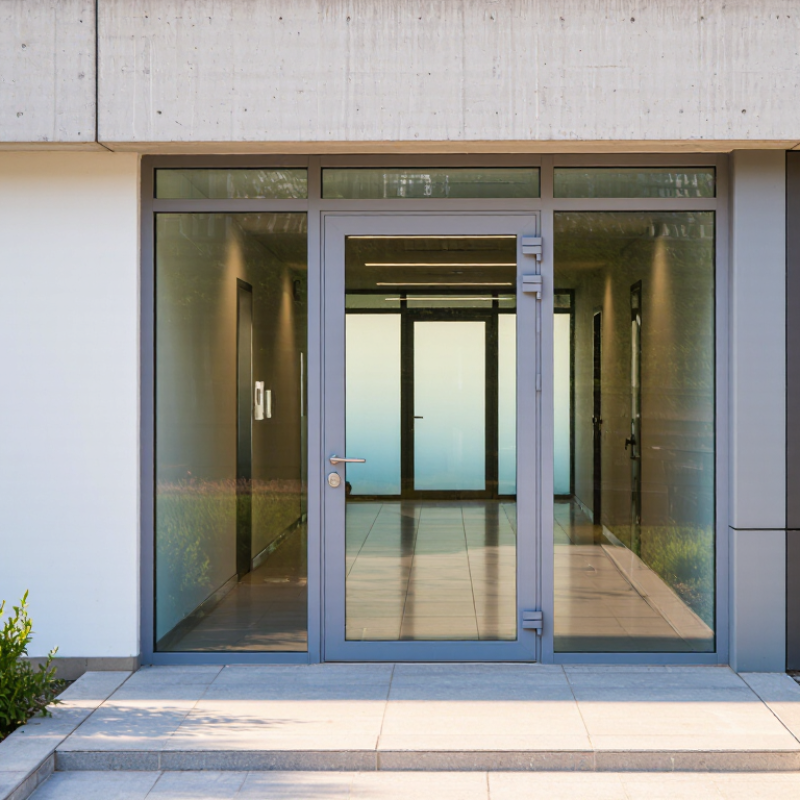
Aluminum doors are made from profiles formed by pressing heated alloy through shaped dies. Pure aluminum has a density of about 2.70 g/cm³, making it lighter than steel. This figure matters during installation, transport, and daily operation. However, door profiles rarely use pure aluminum alone. They usually contain small amounts of magnesium, silicon, manganese, or other controlled elements. These additions improve strength, hardness, corrosion resistance, or manufacturing performance.
The alloy composition affects how a door behaves in real conditions. A magnesium-containing alloy can support stronger frames, while silicon can improve forming and casting characteristics. Exact performance depends on temper, profile thickness, thermal breaks, glass weight, and hardware design. Density is only one measurement. A lighter frame is not automatically a better frame. That assumption needs reconsideration.
In practical door fabrication, engineers inspect wall thickness, corner joints, drainage paths, and surface treatment together. A poorly designed profile can flex, even when the material specification looks impressive. Thermal-break systems can reduce heat transfer through the frame, especially during cold or hot weather. Powder coating or anodizing may protect the surface, but preparation quality still matters. Small installation errors can cause rubbing, leakage, or uneven closing. The material is dependable, but the final door depends on careful alloy selection and precise workmanship.
An aluminum door uses lightweight metal profiles to create its frame, sash, and supporting components. Its strength allows slimmer sightlines than many traditional materials. Aluminum also resists swelling, cracking, and insect damage. However, performance depends on accurate fabrication and proper installation, not metal alone.
Most quality frames begin with 6063-T5 aluminum profiles. The billet is heated and pushed through a shaped die, creating long sections with precise chambers. These profiles are then cooled, cut, and artificially aged to improve hardness and stability. Some frames include a thermal break, which separates interior and exterior aluminum with an insulating strip. This reduces heat transfer and limits condensation. The result is precise.
Finishing usually involves anodizing or powder coating. Anodizing develops a controlled oxide layer within the surface, preserving the metal’s texture and improving corrosion resistance. Powder coating applies dry pigment electrostatically, then cures it under heat for an even color layer. Before either process, profiles need careful cleaning and preparation. Dust, oil, or scratches may remain visible afterward. Small errors matter.
During inspection, check straightness, corner joints, drainage paths, and coating consistency. A drawing can look perfect, but site conditions often disagree. Coastal air, frequent use, and strong sunlight may affect finish selection. No finish is maintenance-free. Gentle cleaning and periodic hardware checks still make a practical difference.
| Data Dimension | Typical Data or Specification | Why It Matters | Practical Consideration |
|---|---|---|---|
| Primary Frame Material | Aluminum alloy, commonly 6063 for architectural extrusions | 6063 provides a useful balance of extrudability, surface quality, corrosion resistance, and strength for door profiles. | The final performance depends on the profile design, wall thickness, hardware, glazing, and installation quality. |
| Temper | 6063-T5 | T5 indicates that the alloy is artificially aged after extrusion to improve mechanical properties. | Actual minimum properties should be verified against the applicable material standard and supplier certificate. |
| Typical 6063-T5 Yield Strength | Approximately 110 MPa minimum for common extruded product specifications | Yield strength indicates the approximate stress level at which permanent deformation begins. | Values can vary by product form, thickness, standard, and temper certification. |
| Density | Approximately 2.70 g/cm³ | Aluminum is substantially lighter than common steel, which can help reduce door and frame handling loads. | A lightweight frame still requires adequate reinforcement for large panels, locks, closers, and wind loads. |
| Extrusion Process | Heated aluminum billet is pressed through a shaped steel die to create continuous profiles. | Extrusion enables integrated channels for glazing, gaskets, drainage, fasteners, and thermal breaks. | Profiles are cut, machined, joined, and assembled after extrusion. |
| Profile Design | Single-chamber, multi-chamber, or thermally broken sections | Chambers and thermal breaks reduce heat transfer and can improve stiffness and weather performance. | The frame depth and section geometry should match the door size, glass weight, climate, and required performance class. |
| Thermal Break | A low-conductivity polyamide separator placed between interior and exterior aluminum sections | It interrupts the direct metal path and can reduce condensation risk and heat flow. | Thermal performance must be evaluated for the complete door assembly, not the frame alone. |
| Surface Preparation | Cleaning, etching, rinsing, and pretreatment before anodizing or coating | Proper preparation improves coating adhesion and helps maintain corrosion resistance. | Pretreatment chemistry and process control are important for consistent finish quality. |
| Anodized Finish | Electrochemically thickened aluminum oxide layer; common architectural thicknesses include about 10–25 µm, depending on specification. | Anodizing creates an integral, wear-resistant surface while retaining the visible character of aluminum. | Color consistency can vary with alloy composition, surface texture, batch, and viewing angle. |
| Powder-Coated Finish | Dry powder is electrostatically applied and cured into a continuous coating; architectural specifications commonly define a coating thickness range. | Powder coating offers a broad range of colors, gloss levels, and textures. | Durability depends on pretreatment, coating system, exposure conditions, edge coverage, and maintenance. |
| Corrosion Resistance | Generally good in normal atmospheric environments, especially with suitable anodizing or coating. | Aluminum forms a naturally protective oxide film, while finishes provide additional protection and appearance. | Salt spray, industrial pollution, trapped moisture, and contact with incompatible metals may accelerate corrosion. |
| Typical Glazing Options | Single glazing, insulated glass units, laminated glass, or tempered glass, subject to frame compatibility | Glass selection affects daylight, safety, acoustic performance, solar control, and thermal efficiency. | The glass thickness and weight must be compatible with rebates, setting blocks, gaskets, and hardware. |
| Weather Sealing | Continuous elastomeric gaskets, corner seals, drainage paths, and compatible sealants | These components help control air infiltration and water penetration at joints and glazing interfaces. | Performance depends on accurate fabrication, compression, drainage design, and site installation. |
| Common Advantages | Low relative weight, dimensional stability, design flexibility, recyclability, and low routine maintenance | These characteristics make aluminum suitable for residential, commercial, and institutional door systems. | Energy performance and long-term durability depend on the complete specification rather than material choice alone. |
| Maintenance Guidance | Clean with mild detergent and clean water; inspect gaskets, drainage holes, fasteners, and hardware periodically. | Routine cleaning removes airborne contaminants that can stain finishes or contribute to localized corrosion. | Avoid abrasive cleaners, harsh solvents, and direct contact between aluminum and incompatible metals. |
Note: Values shown are representative engineering data. Final material properties, finish thickness, thermal performance, air leakage, water resistance, and structural ratings should be confirmed through the applicable standards, project specifications, and tested door-system documentation.
What Is an Aluminum Door and Why Choose One?
Thermal Performance: NFRC 100 U-Factor Testing for Aluminum Doors
An aluminum door combines a strong metal frame with glass, seals, and insulating components. Aluminum resists warping, supports large openings, and requires limited routine maintenance. However, metal conducts heat efficiently. Without thermal breaks, indoor warmth can escape through the frame during winter. Summer heat may enter through the same path.
NFRC 100 provides standardized procedures for determining a door’s U-factor. This value measures how quickly heat moves through the complete product. It considers the frame, glazing, edge spacers, and operating details. Lower U-factor values generally indicate better insulation. That detail matters. A glass-only rating cannot describe the whole door accurately.
In practical evaluations, I look for the published U-factor and the conditions behind it. A strong result can support lower heating and cooling demand, but it does not guarantee comfort everywhere. Installation quality, weather exposure, air leakage, and local climate also influence performance. An installer must maintain continuous insulation around the frame and seal the perimeter carefully. Small gaps can undermine expensive testing. This is where specifications sometimes look better than reality. Reviewing the full NFRC rating, not just the frame material, leads to a more reliable choice.
Aluminum doors combine low weight with strong resistance to corrosion, impact, and repeated use. Their real value depends on tested performance, not appearance alone. AAMA Performance Classes identify project suitability through air leakage, water resistance, structural strength, and operation tests. The common classes are R, LC, CW, and AW. They are not simple quality rankings. Each class reflects different exposure levels, sizes, and design pressures. FGIA’s 2023 guidance emphasizes selecting a class for the building’s location and use. A coastal entrance needs different protection from an interior office door.
ASTM standards provide measurable evidence. ASTM E330/E330M evaluates structural performance under uniform air pressure. ASTM E283 measures air leakage. ASTM E331 checks water penetration during simulated wind-driven rain.
These tests reveal weaknesses around corners, seals, and hardware. The U.S. Department of Energy reports that windows can represent 25–30% of residential heating and cooling energy use. A poorly sealed door can add to that burden, although door results depend heavily on installation.
A common specification mistake is choosing a strong frame while ignoring the threshold and weather seals. That choice looks reasonable. It often fails in real weather.
Tips: Request the tested performance class, design pressure, and ASTM test results. Check glazing safety against ANSI Z97.1 or applicable safety-glazing requirements. Inspect the sill after installation. Even a well-tested aluminum door can underperform when the opening is out of square.
What Is an Aluminum Door and Why Choose One?
An aluminum door uses lightweight metal frames around glass, panels, or other inserts. Its slim profiles create broad openings and clean sightlines. Aluminum also resists moisture, insects, and everyday impacts. In practical use, this means less swelling around damp entrances. It can remain stable through changing seasons when properly designed and installed.
Sustainability is a major reason to consider it. About 75% of all aluminum ever made remains in use, according to widely cited industry estimates. This is possible because aluminum can be recycled repeatedly without losing its basic properties. An old door frame may become part of a new building component. That long service life reduces the need for constant replacement.
Still, the statistic needs careful reading. Recycling requires collection, sorting, transport, and enough recovered material. It is not a magic green label. Manufacturing new aluminum can use substantial energy, especially when raw ore is involved. A better choice depends on recycled content, local recycling access, thermal performance, and installation quality. A poorly fitted frame can leak air and waste energy. Ask for clear material information. Check the frame’s thermal break, hardware quality, and end-of-life options. Aluminum doors can support durable design, but responsible decisions require more than a bright sustainability claim.
Aluminum doors are made from a lightweight, corrosion-resistant metal that can be recycled repeatedly. An estimated 75% of all aluminum ever produced remains in use today, reflecting the material’s long service life and recyclability.
Estimated global share of aluminum ever produced that remains in use versus material no longer in use. Source: International Aluminium Institute.
Many frames use 6063-T5 aluminum profiles. The material is lightweight, stable, and resistant to swelling, cracking, and insects.
Heated aluminum billets are pushed through shaped dies. The long profiles are cooled, cut, and artificially aged for greater hardness.
A thermal break separates indoor and outdoor aluminum with an insulating strip. It reduces heat transfer and may limit condensation. It is not magic.
Anodizing creates a controlled oxide layer inside the surface. Powder coating adds dry pigment and cures it with heat.
Profiles must be cleaned carefully before anodizing or coating. Dust, oil, and scratches can remain visible after finishing. Small flaws show.
Check frame straightness, corner joints, drainage paths, and coating consistency. Also inspect seals, hardware, and the sill after installation.
Choose according to location, exposure, size, and use. Coastal entrances may need different protection than interior office doors.
Structural pressure tests examine frame strength. Air-leakage tests check sealing, while water tests simulate wind-driven rain around seals and corners.
Yes. An opening may be out of square, or the threshold may fit badly. Strong frames cannot correct every installation mistake.
Use gentle cleaning and check hardware periodically. No finish is maintenance-free, especially under strong sunlight or coastal air.
An Aluminum Door is a strong, lightweight entrance solution made from aluminum, a metal with a density of approximately 2.70 g/cm³. Its performance depends on alloy composition and manufacturing quality. Many frames use 6063-T5 profiles, which can be shaped for strength, clean lines, and reliable dimensional stability. Surface finishes such as anodizing or powder coating help improve appearance and resistance to weathering, corrosion, and everyday wear.
Thermal and structural performance are also important when choosing an Aluminum Door. NFRC 100 U-factor testing evaluates how effectively the door limits heat transfer, while insulated cores, thermal breaks, and suitable glazing can improve energy efficiency. AAMA performance classes and ASTM standards help assess resistance to air, water, wind, impact, and repeated use. Aluminum is also highly recyclable, and a large share of the aluminum ever produced remains in active use today, making it a practical material for long service life and more responsible resource consumption.

Novax Window Solutions